

What Is This Article About?
Tukker Watson owns The Moving Guys Alabama in Enterprise, AL, a small market in the South that most operators would overlook. Starting with under $700 and a car that broke down in reverse, he built a moving company with six full-time employees and over 400 Google reviews in seven years. This article breaks down the exact systems he uses to dominate a small market: how he handles word of mouth, reviews, social media, overhead, and customer experience.
Most moving company owners in small markets assume their city is a ceiling. Tukker Watson treated his like a runway.
He Started With $700 and a Car That Broke in Reverse
Tukker Watson did not plan to own a moving company. He learned the idea from a supervisor at AutoZone who mentioned you could rent a U-Haul, grab a couple of friends, and charge people for labor. That was it. No business plan, no investment deck. Just a side hustle that eventually became the only option.
By 2020, Tukker had lost yet another job, this time in the car business. He had about $600 to $700 to his name. Instead of paying rent that month, he went to Harbor Freight, bought two dollies and a drill, picked up 10 to 20 moving blankets, and loaded everything into the back of a car that stalled out every time you put it in reverse. You had to get out and tinker with it to get it going again.
He is now seven years in. Six full-time employees, a handful of part-timers, three enclosed trailers, two trucks, and over 400 Google reviews in Enterprise, Alabama, a city of roughly 30,000 people.
Why Small Markets Are Actually an Advantage
The instinct most movers have in a small town is to feel limited. Less population means fewer leads. Tukker sees it the opposite way.
In a small market, your reputation travels faster than any ad you could run. One great move reaches 15 people. If three of them call you and you do a great job with those three, that process repeats. A year later you get a call from someone who says "so-and-so referred you" and you cannot even place the face, but somewhere down that chain was a job you did right.
The flip side is equally true. A bad move in Enterprise spreads just as fast. Tukker told his crew in a meeting the morning of our conversation: word of mouth can help you or it can hurt you, and that is entirely up to you.
His response to that reality was not to take more jobs. It was to take fewer, done better.
The System Behind 400 Reviews
The number that stands out about The Moving Guys Alabama is not the revenue or the truck count. It is 400-plus Google reviews in a town of 30,000 people. That does not happen by accident.
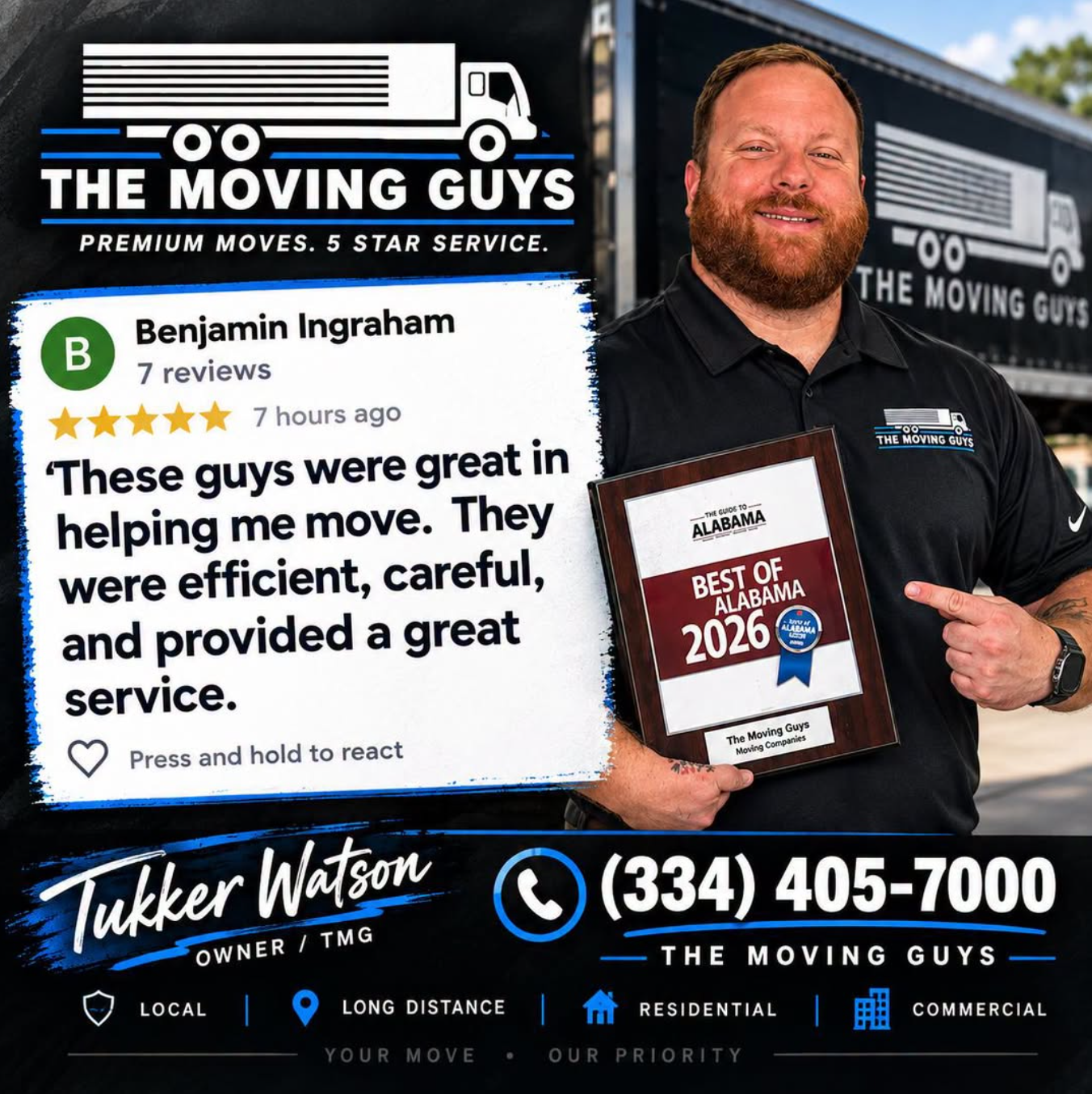
Tukker runs a two-step review system. At the end of every job, after the walkthrough is complete, either Tukker or his project manager delivers a short verbal close. It goes something like this: "We really appreciate this opportunity. Out of everyone you could have called, you chose us, and that means something. If you could take a moment to leave us a Google review, we would really appreciate it."
Then the invoice goes out through Jobber, their CRM, with a review link built into the bottom of it. The customer gets a second touchpoint without Tukker having to do anything extra.
His conversion rate on review requests is roughly 30 to 40 percent. Ten jobs, three to four reviews. Over seven years in a market where everyone knows everyone, that compounds into authority that no paid ad can replicate.
Keep the Overhead Low Enough to Survive the Slow Months
One of the clearest things Tukker said in the entire conversation was about trucks. Everyone tells you to buy your own. He has not, and does not plan to until the deal is right.
He rents from U-Haul and Penske. When a tire blows, it is the rental company's problem. When it needs an oil change, he does not schedule it. That responsibility sitting off his plate frees up capital that he puts back into the business: marketing, training, uniforms, tools.
He has watched other operators go the opposite direction. New truck, new office space, overhead at $10,000 to $15,000 a month before they have built the volume to support it. During busy season it is fine. During slow season they are bleeding. Tukker runs lean so that the slow season is uncomfortable, not fatal.
When it does get slow, he runs skeleton crews, rotates schedules, and tells his team months in advance: put some aside now, because it is coming. Not everyone listens. But he has done his part.
Social Media as Free Lead Generation
Tukker does not run paid ads. He has looked into them, tried them briefly, and decided the organic approach is working well enough that he does not want to split his focus. That might change, but for now everything he generates comes from word of mouth, referrals, Google, and social media.
The tool that made consistency possible was a GoPro. A couple hundred dollars at Best Buy. He sets it up on jobs, lets it run while the crew works, and pulls the footage later. He edits in CapCut, shares to Facebook, Instagram, and TikTok, and makes sure everything goes to stories. His marketing agency, Marketing Navvy, handles a scheduled content calendar on top of what Tukker posts organically, so there is always something going out.
One of his trucks has a QR code on the tailgate. Someone pulls up behind it at a red light, scans it, and lands on the website. He cannot tell you exactly how many people scan it because that lives in a dashboard his team manages, but his phone keeps ringing, so something is working.
He also works with 10 to 15 local realtors across Enterprise and Dothan. One connection turned into a whole team of referrals. That is a channel a lot of moving companies underuse.
How the Name Came From a Customer
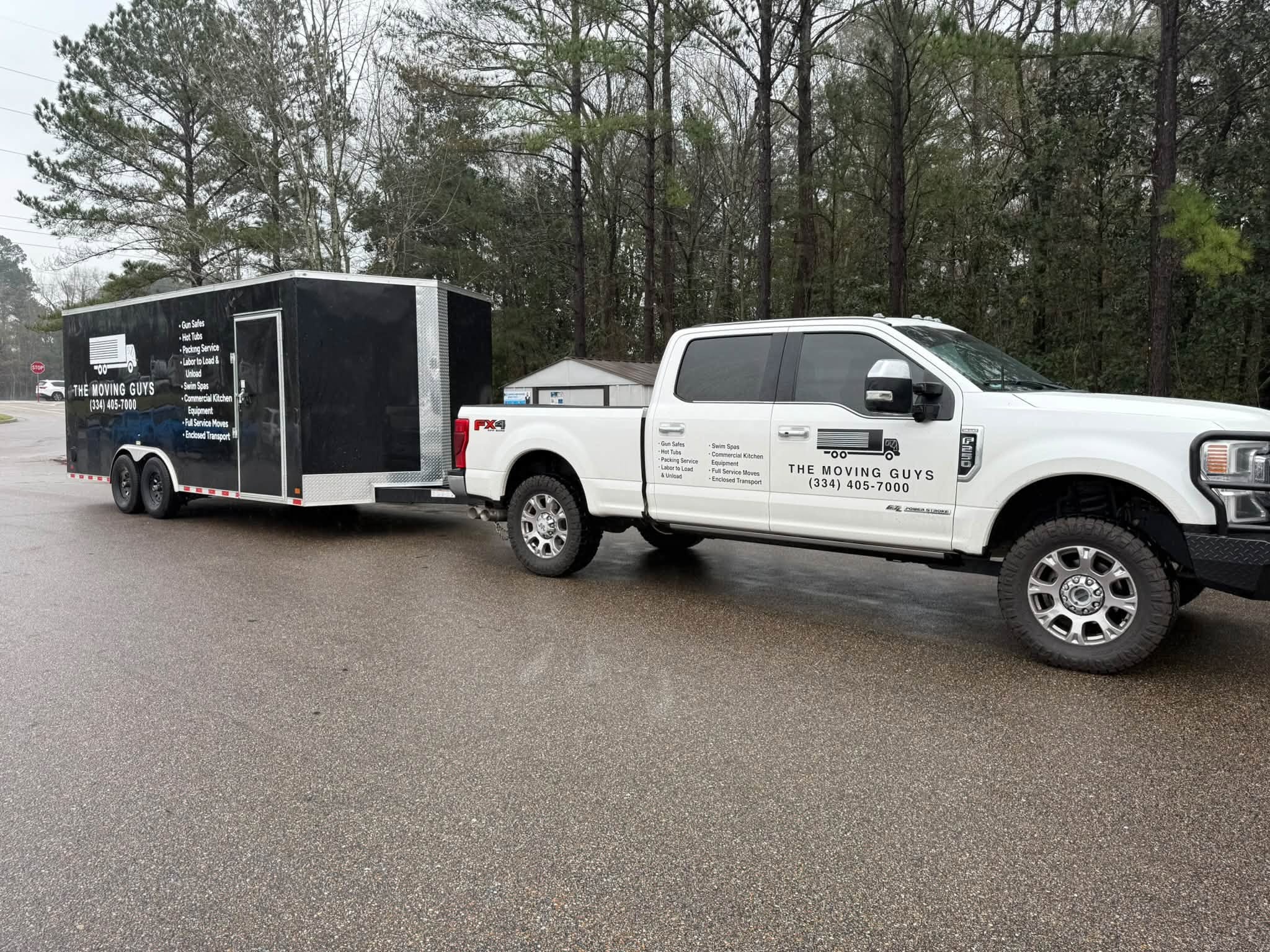
For the first two and a half to three years, Tukker did not have a real company name. He was just the guy people called when they needed to move. Then one afternoon, a customer was on the phone with her husband and said, "The moving guys are here."
That was it. He went home, drew up a logo with a truck and a phone number, filed the LLC, and trademarked it in his area. Clean, simple, and says everything it needs to say.
What Brian Saw Running Moulton Brothers Movers in Miami
When my brother Vincent and I ran Moulton Brothers Movers in Miami from 2021 to 2024, we saw the same thing Tukker is describing play out in a bigger market. The operators who scaled smart kept their overhead tight, built their review count before they built their fleet, and treated every customer like the referral was already in the room. The ones who loaded up on trucks and office space in year one were the ones calling us for help two years later wondering why the numbers were not working.
Tukker is doing the same thing in a smaller pond. The principles are identical. The compounding is faster because everyone in Enterprise knows everyone.
At Heavy Lifting Marketing, we work exclusively with moving companies across the US, and what Tukker has built in Enterprise is one of the cleaner examples of small-market domination we have seen. No paid ads. No fancy funnel. Just quality work, a consistent ask for the review, and enough organic content to stay visible while word of mouth does the heavy lifting.
Ready to Dominate Your Own Market?
There's a system behind every 400-review moving company, no matter how small the town. It starts with a repeatable review ask, lean overhead, and consistent content, not a bigger ad budget.
Book a free strategy call and we'll show you exactly what that system looks like for your market.
Frequently Asked Questions
How did Tukker Watson start The Moving Guys Alabama?
Tukker started by renting U-Hauls and providing labor with a couple of friends, a tip he picked up from a supervisor at AutoZone. He went fully all-in around 2020 after losing his job, investing his last $600 to $700 in hand tools, dollies from Harbor Freight, and moving blankets. He operated out of a car that broke down in reverse, doing jobs on nights and weekends before building it into a full business.
How did The Moving Guys Alabama get 400 Google reviews?
Tukker uses a two-step system. At the end of every job, either he or his project manager delivers a verbal thank-you and directly asks the customer to leave a Google or Facebook review. On top of that, the final invoice sent through their CRM, Jobber, includes a review link at the bottom. Tukker estimates roughly three to four out of every ten customers who are asked end up leaving a review.
How do you dominate a small moving market?
Tukker's approach is to treat quality as a growth strategy rather than a cost. He deliberately caps job volume to protect the customer experience, knowing that one great move in a small town generates referrals that compound over time. He pairs that with consistent social media content, wrapped trucks with a QR code on the tailgate, and relationships with 10 to 15 local realtors who refer clients regularly.
What CRM does The Moving Guys Alabama use?
They use Jobber. Tukker specifically uses its invoicing feature to automate review requests, with a review link built into every final invoice. It is the operational backbone that lets a small team run cleanly without Tukker having to manually follow up on every job.
Should a moving company buy or rent trucks?
Tukker rents from U-Haul and Penske rather than owning his fleet, and he is deliberate about it. When a tire blows or a truck needs servicing, that is the rental company's problem. He runs three enclosed trailers he owns alongside rented box trucks, keeping overhead low enough to survive slow seasons without bleeding cash. His view is that the money saved on truck payments and maintenance can go into marketing, training, and uniforms instead.
How does word of mouth work differently in a small town?
In a small market, reputation travels faster and further than any ad. Tukker told his team the morning of this recording that word of mouth can help you or hurt you, and that is entirely up to the quality of your work. One great move reaches 15 people. Three of them call. Those three refer 15 more. In a larger city that chain is slower because the social circles are bigger. In Enterprise, Alabama, everyone knows everyone, which makes a bad reputation equally dangerous and a great one exponentially valuable.
How does Tukker Watson use social media to grow his moving company?
He posts consistently across Facebook, Instagram, and TikTok using a GoPro he sets up on jobs to capture footage of his crew working. He edits clips using CapCut and shares them to stories, reels, and groups. His marketing agency, Marketing Navvy, handles systematic scheduled posts while Tukker layers in organic behind-the-scenes content on top. He also has a QR code on the tailgate of one of his trucks that links directly to his website, picking up leads at red lights.
How many moves does The Moving Guys Alabama do per month?
They currently run between 20 and 40 moves per month, a mix of full-service moves, packing-only jobs, and load or unload-only work. Tukker's target is to grow toward 60 to 80 moves per month by adding another crew and honing in on full-service and premium relocation work rather than taking every job that calls.